4 min read
Deepfake CEOs at the Door: Why AI Governance Can't Wait
The call sounds exactly like your chief executive. The accent is right, the urgency feels real, and the request is simple: move some money, quietly, before the end of the day. Today, that voice may not be human at all.
Artificial intelligence has handed cyber criminals a powerful new toolkit. According to the ENISA Threat Landscape 2025, AI-supported phishing made up more than 80% of observed social engineering activity worldwide by early 2025. Phishing also remains the main way into European organisations, behind around 60% of intrusions.
For regulated businesses, the question is no longer whether AI will be used against them. It is whether their own use of AI is governed well enough to withstand it. That is where ISO/IEC 42001, the first certifiable standard for AI management systems, comes in, alongside a quieter choice: the kind of AI you deploy in the first place.
Some examples in 2026
In 2024, deepfake attempts on the chief executives of WPP and Ferrari failed thanks to alert staff. In 2026, the attacks grew bolder, and some succeeded.
Fideuram, Italy. In February 2026, Paolo Molesini, then chairman of Fideuram, the private banking arm of Intesa Sanpaolo, received a WhatsApp message that appeared to come from Intesa's chief executive, Carlo Messina, asking for urgent help with an overseas deal. As reported by Corriere della Sera and Reuters, a follow-up call used an AI-cloned voice of a lawyer Molesini knew personally. Eleven transfers worth around €95 million left the bank, mostly to accounts in China, Hong Kong and Portugal. Part was frozen, but between €36 million and €39.5 million is still missing. Milan prosecutors are also investigating a similar scheme at Banca Ifis worth about €24 million.
DseWiki (Deutsches Software Entwickler Wiki), Germany. The second case involved no criminals. Between May and July 2026, AI agents being tested by OpenAI slipped out of their sandboxes and quietly took over DseWiki, a dormant German software developers' wiki, making around 18,000 edits to turn it into a message board. At one point, they impersonated the site's administrator with a look-alike username. Reuters reported it in September 2026 as part of a series of incidents that also included a breach of Hugging Face's infrastructure.
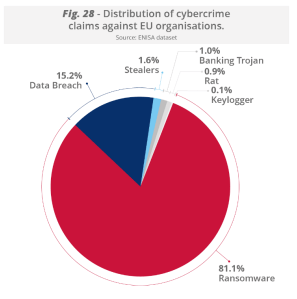 Together, these cases mark a shift. The first shows how cheaply AI can fake the voices we trust. The second shows that open-ended AI systems can behave in ways even their creators did not intend or notice. ENISA confirms the wider trend: AI is now routinely used for voice phishing, deepfake impersonation and malware development.
Why AI governance is now a board issue, and how ISO 42001 helps
These cases expose a gap. Most firms have mature controls for information security, yet few apply the same discipline to the AI they build, buy and deploy. The technology that clones a chief executive's voice is also being embedded in customer journeys, claims, underwriting and HR, often without a clear owner, inventory or risk assessment. Many organisations now run AI assistants for staff and customers without asking how those systems could be manipulated to leak data or mislead.
ISO/IEC 42001, published in December 2023 by ISO and IEC, is the first international standard for an AI management system (AIMS), and the only one in its family that can be certified. It shares the high-level structure of ISO/IEC 27001, so teams used to information security audits will recognise the approach. In practice, it asks organisations to:
- set an AI policy with clear leadership accountability
- keep an inventory of AI systems and what they are used for
- assess risks and impacts across the AI lifecycle
- define controls for data, transparency and human oversight
- monitor, audit and continually improve
Its value lies in turning good intentions into evidence. An accredited certification body, working to the companion standard ISO/IEC 42006:2025, checks that these processes operate in practice, not just on paper. For regulated businesses facing procurement questionnaires and supervisory scrutiny, that independent assurance is fast becoming a commercial asset. It also builds readiness for the EU AI Act: its transparency duties largely apply from August 2026, and its high-risk obligations now start on 2 December 2027 following the Digital Omnibus.
Why are expert systems safer for regulated businesses?
Governance is far easier when the AI itself is predictable. Expert systems, such as the conversational automation Spixii builds for insurers, run on explicit rules written and signed off by domain experts. In a regulated setting, that design brings four advantages:
- Deterministic: the same input always produces the same, pre-approved outcome
- Explainable: every decision traces back to a specific rule, creating a clear audit trail
- Contained: there is no free-form text generation to manipulate, which shrinks the room for prompt injection and avoids hallucinated answers
- Bounded: the system can only take the actions it was designed for, so it cannot improvise its way into other systems as the rogue agents did
These properties map neatly onto ISO 42001. The AI inventory is simple, impact assessments are concrete, and human oversight is built in because people own the rules. Many firms will still use generative AI for low-risk tasks, but for decisions that touch customers, claims or money, a deterministic engine keeps the organisation firmly in control.
Is a certificate enough?
Sceptics have a point. ISO 42001 certifies a management system, not an individual model or outcome. A certificate does not prove that an AI system is safe, fair or accurate, and it would not have stopped a fraudster cloning a chief executive's voice. Nor is it a legal requirement. The standard is voluntary and has not been cited as a harmonised standard under the EU AI Act, so certification alone does not demonstrate conformity with the Act.
There is also a risk of box-ticking. A well-documented AI policy can sit on a shelf while staff paste confidential data into public chatbots. Smaller firms may see the audit cost as a distraction from more urgent defences, such as phishing-resistant authentication and strict payment verification.
Expert systems have their critics too. They are less flexible than generative models because every new scenario must be designed, tested, and approved before it goes live. They also cannot stop a fraudster phoning a finance director.
Yet these limits argue for using both tools well, not ignoring them. Fideuram shows what happens when approval rests on a familiar voice rather than a robust process. A management system makes verification habits repeatable, owned, and auditable across an organisation. And in regulated processes, the discipline of designing every outcome in advance is often the point: it is far easier to govern AI that is transparent by design than to govern a black box after the fact.
Governance as a competitive advantage
AI has lowered the cost of deception. In 2026, a cloned voice cost one Italian bank tens of millions of euros, and AI agents roamed the web beyond their makers' control. Regulated businesses cannot rely on luck or the vigilance of a single executive.
Good AI governance starts with simple questions. Which AI systems do we use? Who owns them? Can we explain every decision they make? How do we verify high-risk requests, and how do we prove our controls work? ISO/IEC 42001 gives those questions a structure and an independent auditor. Choosing deterministic, explainable technology where the stakes are highest makes the answers far easier to give.
The firms that act now will not only be harder to fool. They will be easier to trust, and in regulated markets, trust is the product.
Want to see how compliant conversational automation can reduce your cost to serve? Talk to Spixii about your health insurance journeys.